
Female African Grey Parrot Tools To Make Your Daily Lifethe One Female…
페이지 정보
작성자 Keesha Colburn 작성일25-02-13 09:26 조회8회 댓글0건관련링크
본문
The Daughter of a Female African Grey parrot for sale african grey
The daughter wanted to help her father’s parrot adjust to his new surroundings. She fought for months to get him to eat different foods and come out from his cage. However, he was clearly distressed by his surroundings.
The best way to tell the difference between a male and female african grey parrot is by using DNA testing. This method is reliable and non-invasive.
They are very intelligent
The African grey parrot is considered to be one of the most intelligent birds in the world and can mimic human speech with remarkable accuracy. The species is found in rainforests throughout central Africa, from Cote d'Ivoire to western Kenya. It is a very social animal, nesting in large groups and managing complex relationships in the wild. It is also known to exhibit altruistic behaviour, such as grooming other members of the species or consuming food for them.
African grey parrots, despite their intelligence, are not easy to care for. To be successful, they require daily interactions with humans and various toys and activities. Positive reinforcement is the most effective method to promote desired behavior. They can be taught a variety of tricks and commands. This method rewards desired behaviors by offering them treats, praise or petting. Be patient and consistent when training your pet, and make sure that your sessions are short and fun.
A quarter century ago, Harvard professor Irene Pepperberg worked with a parrot named Alex and her research revolutionized the study of linguistics as well as animal cognition. Her findings, which proved that parrots were able to perform cognitive tasks that are higher than what is typically seen in humans as young as five years old and are still widely accepted today.
They are very talkative
African grey parrots are renowned for their ability to imitate human speech and comprehend the meaning of words. They can differentiate between shapes and colors. In the wild, they are monogamous birds that live in tree cavities, high off the ground. Large cats and snakes prey on them and they defend themselves by puffing up or biting. They play a vital part in their environment and disperse seeds that are not digested.
In captivity, these intelligent creatures are extremely talkative, since they crave interaction. They can become accustomed to a single individual, and the introduction of new family members to them is difficult. Additionally, they can have loud vocalizations that could be annoying to other members of the household. These behavior problems can be prevented by educating the bird with treats.
Some trainers have found removing the bird's usual food source can help reduce unwanted behavior, such as loud vocalizations. This can encourage him to look for other rewards instead of his regular food. This strategy requires time and consistency but should reduce the number of undesirable behavior in the bird's life.
Many pet African greys are known to imitate voices, and they often listen to sounds on the radio or inside their homes. They can be great conversation starters, and they can even learn to recognize the names of their owners.
They are very affectionate
African greys are a very affectionate species and love to bond with their owners. They are also very sensitive and will often react to changes in the home environment or the mood of their owners. They can mimic sounds they hear, such as windows and doors that squeak, backup chimes or vehicle doorbells, microwave oven alarms, and telephone ringtones. It is important to monitor what they hear around them, as when a sound becomes part of their vocabulary, it may be difficult or impossible to get rid of it.
African grey parrots require a lot of stimulation due to their social nature in the wild. A bird who is bored or unappreciated will scream loudly to show its discontent. To prevent this, you should regularly take your African grey bird out of its cage and interact with it.
To ensure your African gray's longevity and health, you must provide optimal care. Make sure you feed your pet a high-quality pellet diet designed for parrots. Fresh fruits and vegetables are also high in vitamins and mineral. Also, give your pet the opportunity to bathe frequently. This could be as simple as a shower in the bathroom or a bowl of water for them to play in. The bathwater should also be kept lukewarm.
They are extremely active
African greys are extremely active birds who thrive in social interactions. They require stimulation frequently, or they'll become bored and begin to whine. Engaging with your pet throughout the day is the best way to prevent this. You can do this by talking to them gently, giving them treats and playing with them. This will help you build trust with the bird and help them feel more comfortable with other people.
In the wild, African greys forage both in the canopy and on the ground. They eat a variety of fruits vegetables, seeds trees, snails, and tree bark. They also consume mud and grasses. Some have been seen helping other members of their species by putting food into the mouths of others. Parrots are also known for their vocalizations, and mimic bats, birds and mammals.
Parrots have been known to chase or lash out at predators when they see danger approaching. This is an instinctual defense mechanism to protect their young and other parrots. In some instances, female african grey parrot parrots will even attack humans if they are afraid.
These birds are among the most intelligent avian pets. They can learn to mimic many human sounds and are among the best parrots at imitating voices. They are also able to recognize a variety of objects and sound effects. They can be taught, for example, to detect the backup sound of the car alarm or home security system. They can even respond to telephone ringtones and microwave alarms.
They are very social
African grey parrots enjoy an extremely social aspect. They fly in large groups and roost together among the trees. They form a dedicated pair bond, and exhibit altruistic behaviors like grooming each other and feeding their young. If their desire for social interaction is not fulfilled they could be stressed and engage in self-harming behavior, such as taking out their own hair.
It is a common belief that African greys can understand human speech because of their natural curiosity and ability for mimicry. However, it's important to remember that African greys aren't naturally talking birds. Their ability to mimic human sounds is a result of imposed isolation as captive birds. They are also often caught in the wings, which further alienates them.
If you're thinking of adopting an African grey, you should consider taking her out of her cage regularly to socialize with family members. This will decrease aggression and feeding behaviors. It is recommended to take your pet out for at least two hours every day.
Positive reinforcement is the most effective method of teaching your pet to listen and obey instructions. Start with basic commands and then gradually increase their complexity. It is also essential to train your parrot in short sessions so that she doesn't get bored. Make sure you use clear constant commands and offer treats during training sessions. This will make it more enjoyable for you both.
They are extremely easy to train
Young African Greys that have been raised by hand can adapt to changes in handling and environmental conditions. Adult parrots, however are less responsive and can begin to feather-pick or become aggressive. Patience, discipline, leadership and hooding (covering the head) are effective methods to change this behavior.
Training your african blue parrot for sale Grey is an ongoing process. It is important that you train your bird twice per day for five minutes. This helps to keep the bird engaged and allows for positive reinforcement. It is also a good time to give your parrot treats, play and a little affection. However, you should avoid rewarding over-aggressive behavior.
Parrots are among the most intelligent animals. African greys can be compared with toddlers in terms of intelligence. They are able to categorize quantify, and identify more than 80 objects. They also have exceptional problem-solving abilities and can solve puzzles, a skill they employ to find food in areas that are difficult to access.
In their natural habitat, Gizmo newborn african grey parrot grays are found in a variety of lowland forest types, including woodlands, rainforests and female african grey parrot Savannahs with wooded areas. They are monogamous and usually pair-bond for life. They typically roost with each other at night, sometimes in groups of over 100 birds. Parrots that are socialized display altruistic behavior in nature. They groom and feed their families and even strangers. They also have a long life span that can last up to 60 years.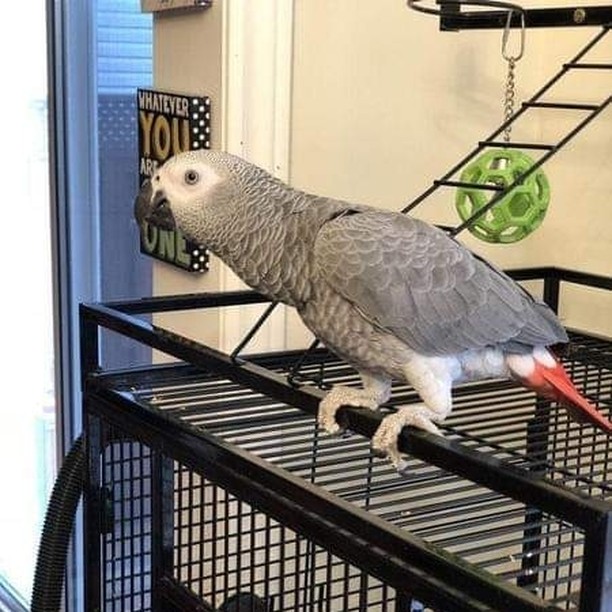
The daughter wanted to help her father’s parrot adjust to his new surroundings. She fought for months to get him to eat different foods and come out from his cage. However, he was clearly distressed by his surroundings.
The best way to tell the difference between a male and female african grey parrot is by using DNA testing. This method is reliable and non-invasive.
They are very intelligent
The African grey parrot is considered to be one of the most intelligent birds in the world and can mimic human speech with remarkable accuracy. The species is found in rainforests throughout central Africa, from Cote d'Ivoire to western Kenya. It is a very social animal, nesting in large groups and managing complex relationships in the wild. It is also known to exhibit altruistic behaviour, such as grooming other members of the species or consuming food for them.
African grey parrots, despite their intelligence, are not easy to care for. To be successful, they require daily interactions with humans and various toys and activities. Positive reinforcement is the most effective method to promote desired behavior. They can be taught a variety of tricks and commands. This method rewards desired behaviors by offering them treats, praise or petting. Be patient and consistent when training your pet, and make sure that your sessions are short and fun.
A quarter century ago, Harvard professor Irene Pepperberg worked with a parrot named Alex and her research revolutionized the study of linguistics as well as animal cognition. Her findings, which proved that parrots were able to perform cognitive tasks that are higher than what is typically seen in humans as young as five years old and are still widely accepted today.
They are very talkative
African grey parrots are renowned for their ability to imitate human speech and comprehend the meaning of words. They can differentiate between shapes and colors. In the wild, they are monogamous birds that live in tree cavities, high off the ground. Large cats and snakes prey on them and they defend themselves by puffing up or biting. They play a vital part in their environment and disperse seeds that are not digested.
In captivity, these intelligent creatures are extremely talkative, since they crave interaction. They can become accustomed to a single individual, and the introduction of new family members to them is difficult. Additionally, they can have loud vocalizations that could be annoying to other members of the household. These behavior problems can be prevented by educating the bird with treats.
Some trainers have found removing the bird's usual food source can help reduce unwanted behavior, such as loud vocalizations. This can encourage him to look for other rewards instead of his regular food. This strategy requires time and consistency but should reduce the number of undesirable behavior in the bird's life.
Many pet African greys are known to imitate voices, and they often listen to sounds on the radio or inside their homes. They can be great conversation starters, and they can even learn to recognize the names of their owners.
They are very affectionate
African greys are a very affectionate species and love to bond with their owners. They are also very sensitive and will often react to changes in the home environment or the mood of their owners. They can mimic sounds they hear, such as windows and doors that squeak, backup chimes or vehicle doorbells, microwave oven alarms, and telephone ringtones. It is important to monitor what they hear around them, as when a sound becomes part of their vocabulary, it may be difficult or impossible to get rid of it.
African grey parrots require a lot of stimulation due to their social nature in the wild. A bird who is bored or unappreciated will scream loudly to show its discontent. To prevent this, you should regularly take your African grey bird out of its cage and interact with it.
To ensure your African gray's longevity and health, you must provide optimal care. Make sure you feed your pet a high-quality pellet diet designed for parrots. Fresh fruits and vegetables are also high in vitamins and mineral. Also, give your pet the opportunity to bathe frequently. This could be as simple as a shower in the bathroom or a bowl of water for them to play in. The bathwater should also be kept lukewarm.
They are extremely active
African greys are extremely active birds who thrive in social interactions. They require stimulation frequently, or they'll become bored and begin to whine. Engaging with your pet throughout the day is the best way to prevent this. You can do this by talking to them gently, giving them treats and playing with them. This will help you build trust with the bird and help them feel more comfortable with other people.
In the wild, African greys forage both in the canopy and on the ground. They eat a variety of fruits vegetables, seeds trees, snails, and tree bark. They also consume mud and grasses. Some have been seen helping other members of their species by putting food into the mouths of others. Parrots are also known for their vocalizations, and mimic bats, birds and mammals.
Parrots have been known to chase or lash out at predators when they see danger approaching. This is an instinctual defense mechanism to protect their young and other parrots. In some instances, female african grey parrot parrots will even attack humans if they are afraid.
These birds are among the most intelligent avian pets. They can learn to mimic many human sounds and are among the best parrots at imitating voices. They are also able to recognize a variety of objects and sound effects. They can be taught, for example, to detect the backup sound of the car alarm or home security system. They can even respond to telephone ringtones and microwave alarms.
They are very social
African grey parrots enjoy an extremely social aspect. They fly in large groups and roost together among the trees. They form a dedicated pair bond, and exhibit altruistic behaviors like grooming each other and feeding their young. If their desire for social interaction is not fulfilled they could be stressed and engage in self-harming behavior, such as taking out their own hair.
It is a common belief that African greys can understand human speech because of their natural curiosity and ability for mimicry. However, it's important to remember that African greys aren't naturally talking birds. Their ability to mimic human sounds is a result of imposed isolation as captive birds. They are also often caught in the wings, which further alienates them.
If you're thinking of adopting an African grey, you should consider taking her out of her cage regularly to socialize with family members. This will decrease aggression and feeding behaviors. It is recommended to take your pet out for at least two hours every day.
Positive reinforcement is the most effective method of teaching your pet to listen and obey instructions. Start with basic commands and then gradually increase their complexity. It is also essential to train your parrot in short sessions so that she doesn't get bored. Make sure you use clear constant commands and offer treats during training sessions. This will make it more enjoyable for you both.
They are extremely easy to train
Young African Greys that have been raised by hand can adapt to changes in handling and environmental conditions. Adult parrots, however are less responsive and can begin to feather-pick or become aggressive. Patience, discipline, leadership and hooding (covering the head) are effective methods to change this behavior.
Training your african blue parrot for sale Grey is an ongoing process. It is important that you train your bird twice per day for five minutes. This helps to keep the bird engaged and allows for positive reinforcement. It is also a good time to give your parrot treats, play and a little affection. However, you should avoid rewarding over-aggressive behavior.
Parrots are among the most intelligent animals. African greys can be compared with toddlers in terms of intelligence. They are able to categorize quantify, and identify more than 80 objects. They also have exceptional problem-solving abilities and can solve puzzles, a skill they employ to find food in areas that are difficult to access.
In their natural habitat, Gizmo newborn african grey parrot grays are found in a variety of lowland forest types, including woodlands, rainforests and female african grey parrot Savannahs with wooded areas. They are monogamous and usually pair-bond for life. They typically roost with each other at night, sometimes in groups of over 100 birds. Parrots that are socialized display altruistic behavior in nature. They groom and feed their families and even strangers. They also have a long life span that can last up to 60 years.
댓글목록
등록된 댓글이 없습니다.